Posts tagged Quality Engineering
37 articles

IATF 16949 Clause-by-Clause Audit Readiness: What the Automotive-Specific Requirements Actually Ask For
A clause-by-clause walk through IATF 16949's automotive-specific adders, the decimal sub-clauses layered on top of ISO 9001 that trip up surveillance audits. What objective evidence each one wants, why a single internal audit program is not enough under clause 9.2.2.1, and how the platform keeps the QMS, layered process, and supplier audit trails separate instead of collapsing them into one generic checklist.

First Article Inspection Report Rejected: Where the AS9102 Chain Actually Breaks
An AS9102 binder rarely comes back for a missing document. It comes back because one link broke in the chain from drawing to balloon to characteristic to Form 3 result to Form 1 signature. Six recurring chain breaks, in practitioners' own words, mapped to what Rev C requires, what a source inspector checks, and what QualityEngineer.ai does, and does not yet do, about each one.

Western Electric Rules: What a Control Chart Catches Before a Point Breaches the Limit
Western Electric rules flag drift and trend patterns on a control chart before any point crosses 3-sigma. Here is what each of the 8 rules checks, which ones run by default, and what actually happens when one fires.

Supplier Risk Scoring: How We Catch a Slipping Supplier Before It Becomes a PPAP Rejection
A supplier's corrective action response time can slide from five days to three weeks with nobody noticing, right up until a PPAP resubmission gets kicked back a third time. How QualityEngineer.ai scores supplier risk from four weighted signals, tiers the result Critical to Low, and triggers the second party audit before the paperwork catches up to the floor.

AI GD&T Extraction: How a Drawing Becomes a PPAP-Ready Characteristic List
A new revision lands and someone has to read every GD&T feature control frame, balloon it, and type it into a spreadsheet before the PFMEA or Control Plan can start. Here is how Blueprint Intelligence turns that drawing into structured characteristics instead.

PPAP Element 8: What Has to Be Covered Besides the Gauge R&R Report?
A single Gauge R&R report attached to Element 8 flips the element's status to submitted, but that is not the same as every special characteristic on the part having a defensible measurement system behind it. Here is what Element 8 actually has to cover under AIAG PPAP 4th Edition and IATF 16949 Clause 7.1.5.1.1, why a package can look complete and still leave a critical gauge unqualified, and how QualityEngineer.ai tracks MSA coverage characteristic by characteristic instead of element by element.

PPAP Element 10: What Actually Counts as a Material and Performance Test Result?
A mill cert PDF is not Element 10. Records of Material and Performance Test Results is its own PPAP element with its own heat lot traceability, DVP&R coverage, and lab accreditation requirements under AIAG PPAP 4th Edition and IATF 16949 Clause 8.6.2. Here is what has to be in the folder, why the cert alone gets kicked back, and how QualityEngineer.ai keeps the material record attached to the part instead of floating in an email thread.

Part Submission Warrant: How Do You Fill Out a PSW That Matches What Is Actually in the Package?
Most PPAP rejections on the warrant are not manufacturing problems. A box is checked for an element that is not in the folder, or the revision on the cover does not match the design record behind it. Here is how QualityEngineer.ai generates the Part Submission Warrant from the package itself, so PPAP Element 18 cannot claim something the submission does not contain.

AS9102 Form 3 Dimensional Results: How Do You Catch an Out-of-Tolerance Characteristic Before the FAI Ships?
The FAI that gets rejected two weeks after you ship it usually fails on one out-of-tolerance result nobody flagged. Here is how QualityEngineer.ai records AS9102 Form 3 dimensional results against the ballooned drawing so every measured value is checked against its own tolerance the moment it is entered, not by the customer's source inspector.

How We Fix Bugs in Your Quality Software Before You Report Them
Most quality software vendors run support as a ticket queue that waits for you to notice, write it up, and hand it off. We run ours like a corrective action, the same 8D discipline IATF 16949 Clause 10.2 asks of you. Here is how that loop works, the numbers we actually hit, and the ones we do not yet.
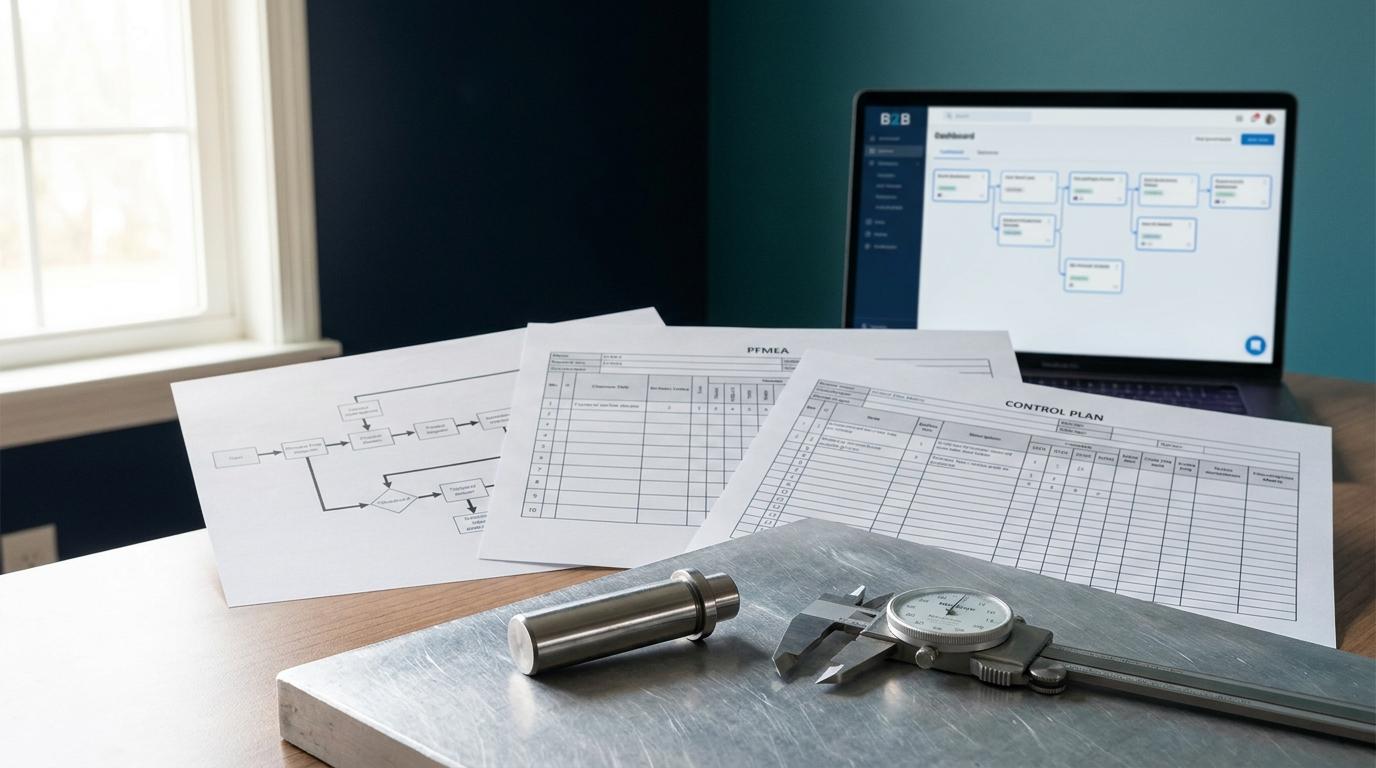
PFMEA to Control Plan Linkage: How We Build One Document From the Other
The PPAP kickback that says your Control Plan does not match your PFMEA comes from re-keying three documents by hand. Here is how QualityEngineer.ai links Process Flow, PFMEA, and Control Plan so the alignment holds by construction, not by proofreading.

The Year the Rulebook Gets Rewritten
ISO 9001, IATF 16949, and AS9100 are all being revised at once, a rare forced recall put traceability back in the spotlight, and AI inspection moved to the line. What a quality engineer should actually do about it.
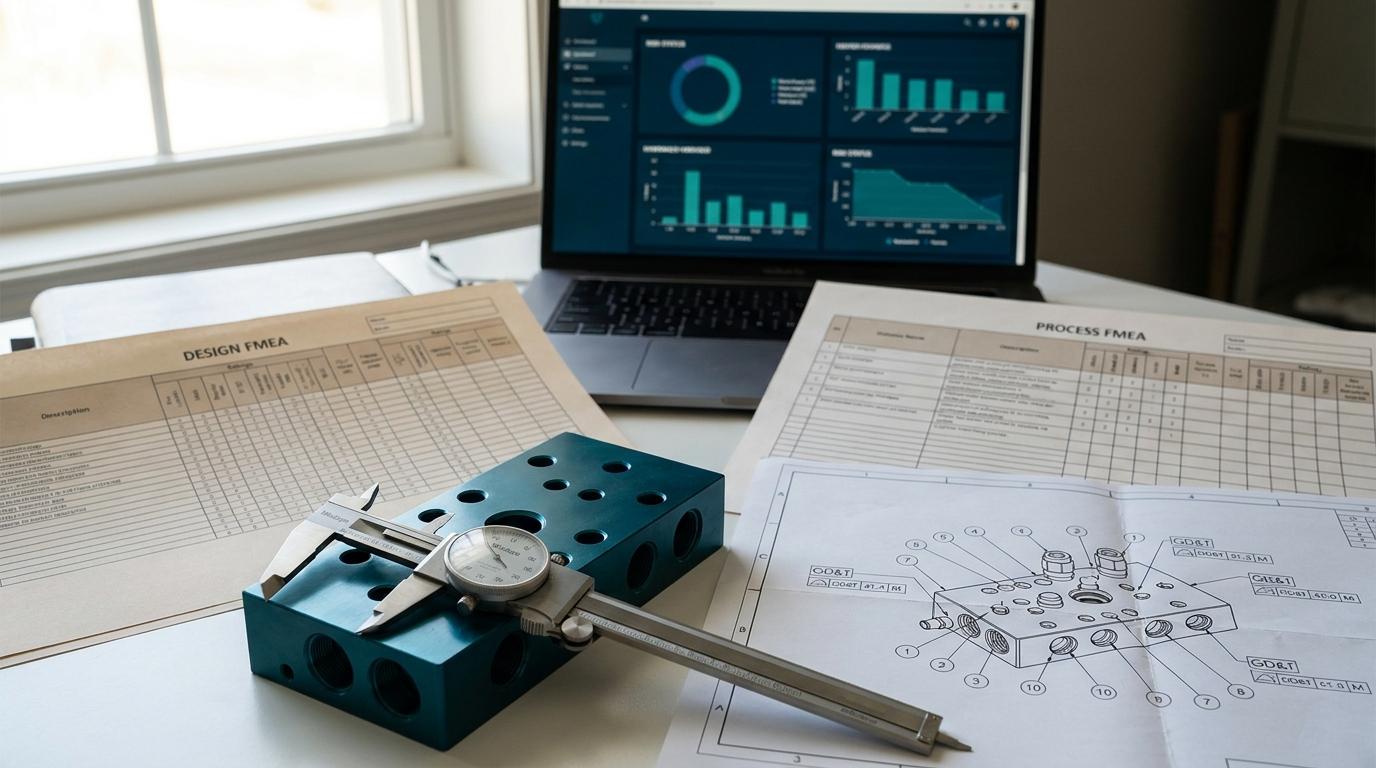
DFMEA vs PFMEA: How Design and Process FMEA Divide the Work and Where They Have to Line Up
A DFMEA and a PFMEA are not the same document at two stages of maturity. They analyze different things, are owned by different people, and get kicked back for different reasons. Here is what each one covers, how the AIAG-VDA seven-step method applies to both, and the severity and characteristic links a customer reviewer checks first.
PPAP Submission Levels 1 Through 5: What Each Level Requires and How Your Customer Decides Which One You Submit
A practitioner walkthrough of the five PPAP submission levels in the AIAG PPAP 4th Edition. What Level 1 through Level 5 each require you to submit versus retain, why Level 3 is the default, how the customer designates the level, what a significant production run has to look like, and how to read the Submission and Retention Requirements table so your package matches what the SQE actually asked for.
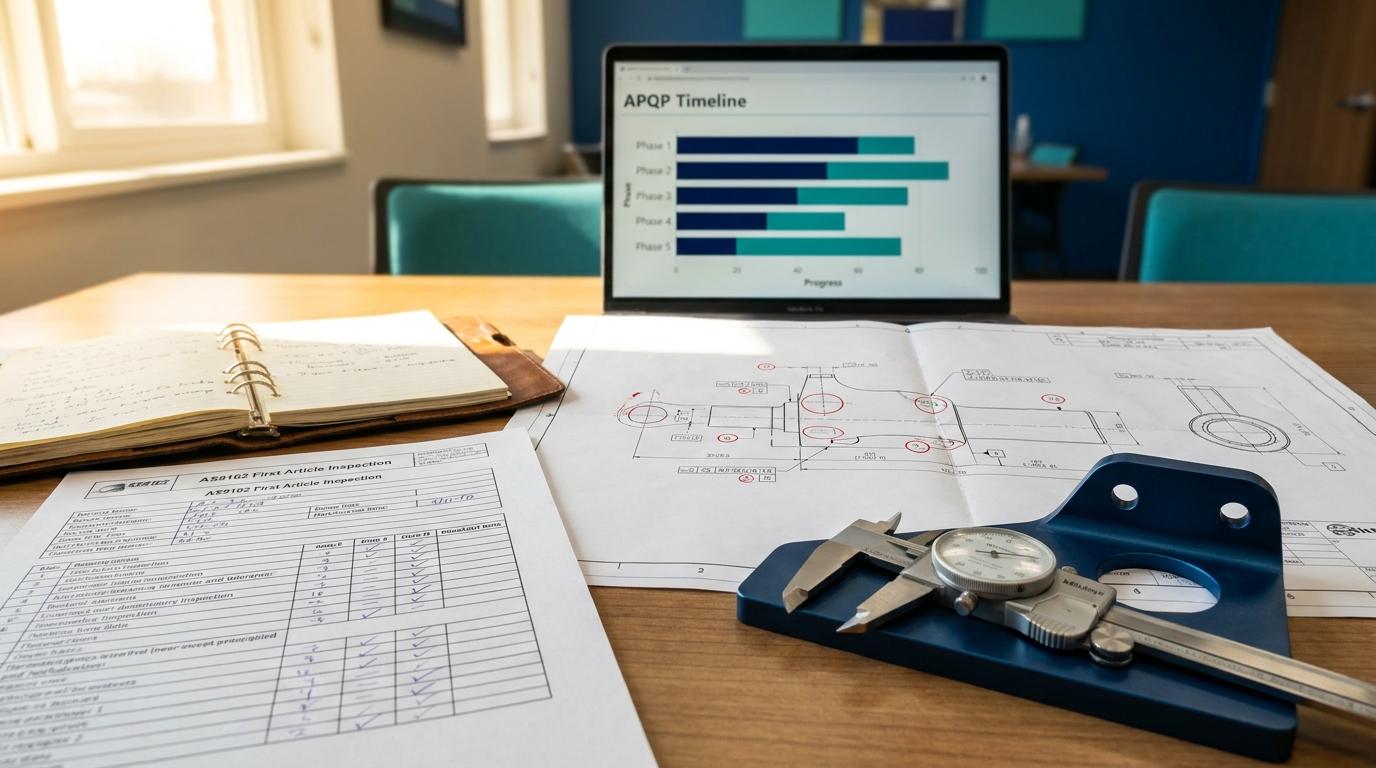
AS9145 Aerospace APQP and PPAP: A Field Map for Suppliers Coming From AIAG
An aerospace customer just flowed down AS9145 instead of AIAG APQP and PPAP. Here is a practical mapping of the five phases, the 11 aerospace PPAP elements versus the automotive 18, where AS9145 diverges from what you already do, and the traps that get a first submission kicked back.

Should You Build Your Quality Stack with an AI Coding Agent?
An AI coding agent can produce working PPAP tooling, auto ballooning, and cert generation in a couple of weeks now. That part is real. The question that decides whether it was a good idea is what the same tool costs you in year two and year three, not week one.

PPAP Element 11 Initial Process Studies: What Ppk Value Passes and Why Reviewers Reject the Number Before They Read It
Element 11 is where the statistical work of a PPAP package either holds up or collapses. A reviewer's-seat walkthrough of Initial Process Studies under AIAG PPAP 4th Edition: why initial studies report Ppk and not Cpk, the three-tier acceptance criteria at 1.33 and 1.67, the two prerequisites a reviewer verifies before trusting your index, the significant production run sample rules, the non-normal and one-sided characteristic trap that voids a clean-looking number, five kickback patterns, and a pre-submission QA pass you can run in fifteen minutes.

AS9102 Form 1 Part Number Accountability: The Cover Sheet That Locks the FAI Binder and How Rev C Rewrote It
Form 1 is the smallest sheet in an AS9102 FAI package and the one that determines whether the reviewer even opens Form 2. A field by field walkthrough of Form 1 under AS9102 Rev C: the Part Type shift that replaced the serial number, the signature lock that closes the binder, the sub-assembly rollup rules, the full versus partial declaration, the four kickback patterns that eat submissions, and a pre-submission QA pass a supplier quality lead can run in twenty minutes.

Supplier Quality Trends 2026: What Is Actually Changing on the Floor This Year
A practitioner read on what is shifting in supplier quality in 2026. Not the analyst slides. The clause changes, the customer scorecard moves, the NADCAP scope tightening, the PPAP and APQP 3rd Edition transition, the engineering drawing intelligence buildout, and the data exchange standards that are starting to land on supplier dashboards. What each one means for a supplier quality engineer who has to ship FAIs and PPAPs through it.

AS9102 Form 2 Product Accountability: The Materials, Special Processes, and Functional Testing Evidence That Has to Survive a Customer Reviewer
AS9102 Form 2 is the FAI form most often returned by a customer reviewer, and not because of the part. It is the supply chain map: every material spec, every special process, every functional test, with the supplier and the cert that proves it. A practitioner walkthrough of what each cell has to carry, the four kickback patterns that cost the most rework, and how to QA the form before the binder leaves your hands.

APQP 3rd Edition Transition: What Changed in the Combined APQP and Control Plan Manual and What Your Submission Package Has to Look Like Now
A practitioner walkthrough of the AIAG APQP and Control Plan 3rd Edition. What changed from the 2nd Edition APQP manual and the separate Control Plan reference, how the combined manual restructures the five phases, what cybersecurity and product safety expectations got added, and how to rebuild your APQP package so PPAP reviewers find what they look for in the new order.
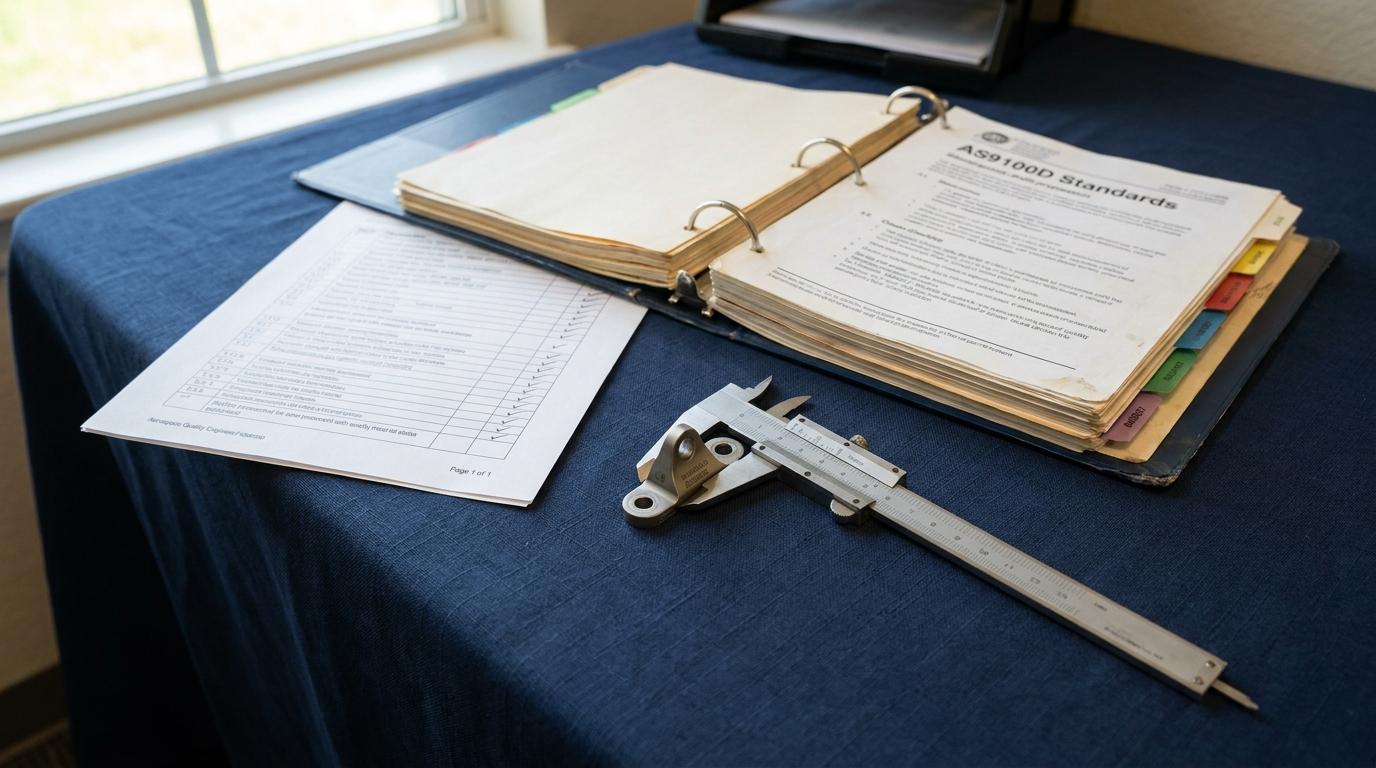
AS9100 Clause-by-Clause Audit Readiness: What Objective Evidence Each Requirement Wants Before the CB Walks In
An AS9100D readiness walkthrough by clause. What objective evidence each requirement expects, how the certification body actually verifies it, and the specific gaps that turn into minor and major findings during Stage 2 and surveillance audits.

PPAP 18 Elements Checklist: What Each Element Has to Show to Pass a Customer Submission Review
A practitioner checklist for all 18 PPAP elements under the AIAG PPAP 4th Edition. What each element actually has to contain, the reviewer mindset on the customer side, and the specific defects that get a Level 3 package kicked back to Interim.

FAI vs PPAP: When Aerospace Suppliers Need First Article Inspection, PPAP, or Both
FAI under AS9102 and PPAP under AIAG cover similar ground for different supply chains. A practical guide to where they overlap, where they don't, which customers ask for which, and how dual-cert aerospace shops keep one source of truth feeding both submissions.

AS9102 Partial FAI Re-accomplishment: When You Need One and What Has to Be in the Binder
AS9102 partial FAI re-accomplishment is the clause aerospace SQEs argue about most. A practical guide to Clause 4 triggers, the impact analysis a customer expects to see, what changes on Form 1, Form 2, and Form 3 when scope is partial, and how to keep the original FAI binder defensible through a revision.
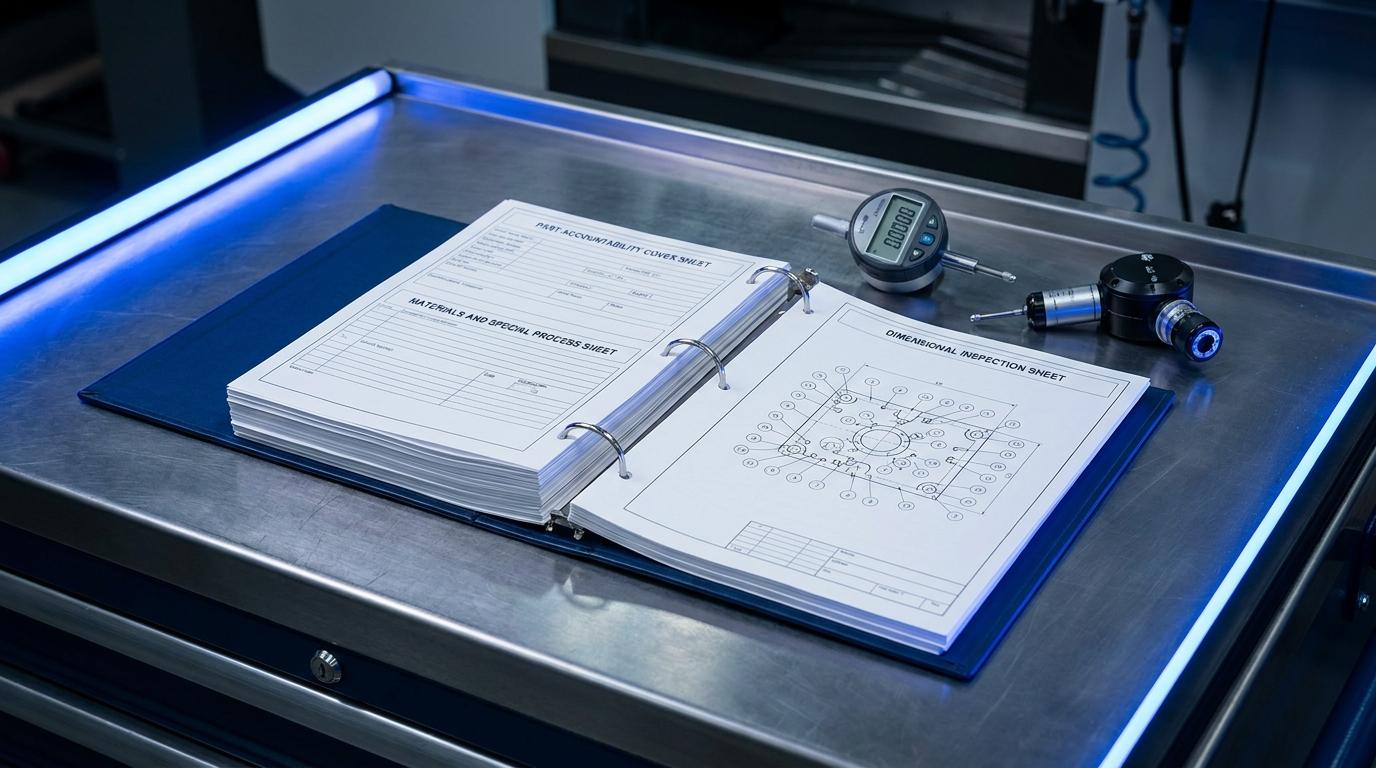
AS9102 First Article Inspection: How Form 1, Form 2, and Form 3 Fit Together Under Rev C
A practical guide to the AS9102 First Article Inspection report under Rev C. Form 1 part accountability, Form 2 material and process verification, Form 3 dimensional results, when an FAI is required, how to handle re-accomplishment, and what changed from Rev B.

Surface Finish Per Balloon: Why Ra, Lay, and Machining Allowance Belong on Every Characteristic
Most drawing extraction tools dump surface finish into a notes block and call it done. Here is why per balloon surface finish extraction matters for inspection plans, and what it takes to parse Ra, Rz, lay direction, and machining allowance into structured data the way ASME Y14.36 and ISO 1302 actually intend.

AS9100 Internal Audit Checklist: What Aerospace Quality Teams Need to Cover
A practical AS9100D internal audit checklist for aerospace quality engineers. Covers all clauses, the aerospace-specific adders to ISO 9001, common Rev D findings, and how AS9100 differs from AS9102 and NADCAP.

PFMEA Software vs Templates: When Spreadsheets Stop Working
Excel-based PFMEA templates work for one program at a time. They break the moment Action Priority ratings need to propagate to a Control Plan, a process step revision lands mid-program, or three engineers edit the same workbook. PFMEA software solves the propagation problem the AIAG-VDA 2019 handbook now expects you to solve.

PPAP Software: How Purpose-Built Tools Reduce Submission Rework
PPAP submissions get kicked back for the same handful of reasons: missing elements, inconsistent revisions, mismatched characteristics. PPAP software solves the rework problem by enforcing structure across the 18 elements before the package leaves your hands.

APQP Software vs Spreadsheets: Where Excel-Based Programs Break Down
Managing APQP in Excel works for one program. At three or more simultaneous launches, spreadsheet-based APQP creates version control chaos, missed milestones, and disconnected documents that collapse at phase gate reviews.

8D vs CAPA: What's the Difference and When to Use Each
8D and CAPA are not the same thing. 8D is a problem-solving methodology. CAPA is a quality system requirement under IATF 16949. Conflating them causes audit findings and customer rejections.

Control Plan in Manufacturing: What Goes in It and How to Build One
A column-by-column breakdown of the manufacturing control plan: what each field requires, how it connects to your PFMEA, and what auditors actually check under IATF 16949 Clause 8.5.1.

Process FMEA (PFMEA): A Practical Guide for Automotive Quality Engineers
How to build a Process FMEA that holds up under customer review and IATF 16949 audit scrutiny, including the AIAG-VDA 2019 shift from RPN to Action Priority.
IATF 16949 Internal Audit Checklist: What Every Quality Engineer Needs to Know
A practical IATF 16949 internal audit checklist covering all major clauses, common findings, and tips for running audits that actually prepare you for certification.

What is APQP? Advanced Product Quality Planning Explained
A comprehensive guide to Advanced Product Quality Planning (APQP), the 5 phases, key deliverables, how it connects to PPAP, and why it's the backbone of automotive supplier quality.

What is PPAP? A Complete Guide for Quality Engineers
Everything quality engineers need to know about PPAP, definition, the 18 elements, submission levels, common mistakes, and how AI is changing the process.